
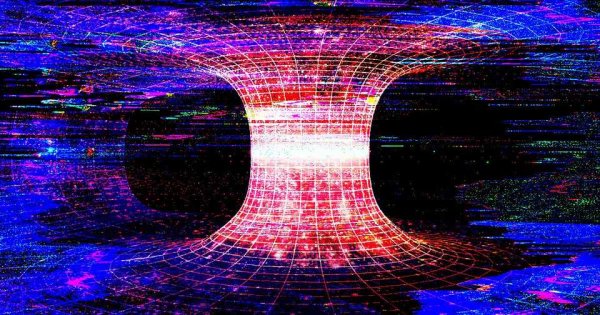
When a team of physicists used Google's 72-qubit Sycamore 2 quantum processor to simulate a pair of black holes and send a message between them, the experiment was described in a paper published in Nature on Wednesday. But the coverage that followed, with headlines claiming a 'baby wormhole' had been built, drew sharp rebukes from experts who say the reports fundamentally misrepresented what was achieved.
The research, led by Harvard physics professor Daniel Jafferis and involving scientists from Fermilab and other institutions, did not create a physical wormhole. Instead, the team used the quantum computer to model the dynamics of a wormhole—a theoretical tunnel through spacetime—and observed how information might pass through it. The results, while intriguing, are a simulation, not a tangible object.
Why Headlines Misled
Major outlets, including The New York Times, Reuters, and The Guardian, ran stories with headlines that suggested a real wormhole had been created. The Times proclaimed 'Physicists Create the Smallest, Crummiest Wormhole You Can Imagine,' while Reuters and The Guardian used similar language. Critics, such as German physicist and science writer Sabine Hossenfelder, called these headlines 'bullshit' and accused them of deliberately misleading readers. She argued that using the same mathematics, anything at constant temperature could be called a black hole, and that the 'wormhole' talk was just a fancy word for a piece of math.
Quantum computing expert Scott Aaronson, who was not involved in the research, told The New York Times that if the experiment had brought a wormhole into physical existence, then sketching one with pen and paper would do the same. His point underscores the gap between mathematical simulation and physical reality.
The researchers themselves were more measured. Joseph Lykken of Fermilab, a co-author of the study, told Reuters, 'There's a difference between something being possible in principle and possible in reality. So don't hold your breath about sending your dog through the wormhole. But you have to start somewhere.' He added that the simulation 'looks like a duck, it walks like a duck, it quacks like a duck' in terms of the properties they examined, but stopped short of claiming it was a wormhole.
The Science Behind the Simulation
The experiment used Google's Sycamore 2 processor to simulate a simplified model of a wormhole, based on the holographic principle—a concept that links quantum physics and gravity. The team observed that information sent through the simulated system behaved as expected for a wormhole, but this is a mathematical analogy, not a physical creation.
Daniel Jafferis explained to The New York Times, 'We are just using the quantum computer to find out what it would look and feel like if you were in this gravitational situation.' That nuance was often lost in the headlines, which many readers saw without reading the full articles.
The episode highlights a recurring challenge in science communication: the temptation to overstate results to attract attention, which can mislead the public and erode trust in science. As Hossenfelder suggested, such headlines 'deliberately misinform the reader,' and she advised unfollowing outlets that promote such nonsense.
While the simulation is a step forward in quantum gravity research, it is not a wormhole. The distinction matters, not just for scientific accuracy, but for public understanding of what quantum computers can and cannot do.
Comments 0