
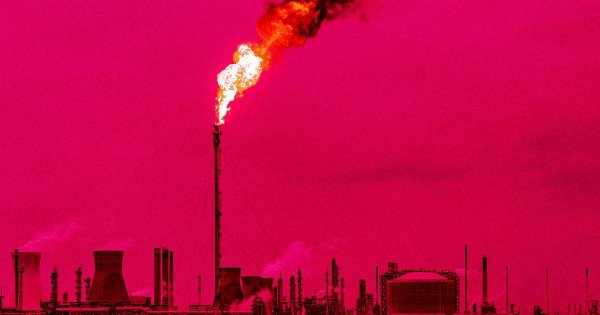
A United Nations assessment released this week paints a stark picture: the world's largest oil-producing nations are poised to extract more fossil fuels by 2030 than at any point in history, directly contradicting their public commitments to curb emissions. The report, dubbed the “Production Gap Report,” singles out the United States, Russia, and Saudi Arabia for what it describes as a hypocritical push to expand drilling while simultaneously pledging to address climate change.
UN Secretary-General António Guterres did not mince words in a press release accompanying the report. “Governments are literally doubling down on fossil fuel production; that spells double trouble for people and planet,” he said. The report's findings underscore a fundamental tension: while scientists and activists have long argued that reducing emissions requires cutting production at the source, many of the world's most influential energy players are doing the opposite.
According to the report's projections, the top 20 oil-producing countries—which also include India, Brazil, and Canada—are on track to generate more than double the amount of fossil fuels considered safe by climate experts by the end of this decade. This forecast is based on the countries' own stated plans, highlighting a significant disconnect between the promises made in international climate agreements and the reality of national energy strategies.
Of those 20 nations, 17 have made net-zero emissions pledges, yet their current trajectories suggest those commitments are not being honored. The report identifies four exceptions—the United Kingdom, Norway, Germany, and, notably, China—where emissions are expected to decline if the countries stick to their existing plans. These nations, the report suggests, may serve as examples of how policy shifts can align with climate goals.
The UN's frustration is palpable, and the findings align with broader observations that global efforts to transition away from polluting energy sources have largely stalled. Beyond the environmental toll, experts argue that continued reliance on fossil fuels is economically short-sighted. Neil Grant, an author of the report and a researcher at the Climate Analytics think tank, told The Guardian that governments are “plowing yet more money into a dirty, dying industry” while a thriving clean energy sector offers viable alternatives. He called the situation “economic insanity” and “a climate disaster of our own making.”
Why the Production Gap Matters
The report's title refers to the gap between what countries promise to do and what they actually plan to do. This gap is not just a matter of broken promises; it has tangible consequences for global warming. If current trends continue, the report warns, the world will blow past the emissions targets set in the Paris Agreement, leading to more severe climate impacts such as extreme weather, rising sea levels, and loss of biodiversity.
The findings also raise questions about the feasibility of net-zero pledges, which have become a cornerstone of corporate and governmental climate strategies. While such pledges are often touted as evidence of commitment, the Production Gap Report suggests they may be little more than public relations exercises without corresponding policy changes.
For the four countries expected to see emissions declines, the report offers a glimmer of hope, but it also underscores the uneven nature of global climate action. The United Kingdom and Norway, for example, have implemented policies to reduce oil and gas production, while Germany has accelerated its renewable energy transition. China's inclusion on this list is notable, given its status as the world's largest emitter, but the report attributes its projected decline to specific policy measures rather than a wholesale shift in energy strategy.
As the world prepares for the next round of climate negotiations, the Production Gap Report serves as a sobering reminder that words alone will not solve the crisis. The report calls on governments to align their production plans with their climate pledges, a step that would require significant political will and economic restructuring. Whether such alignment is achievable remains an open question, but the report's authors are clear about the stakes: continued expansion of fossil fuels is incompatible with a livable planet.
Comments 0