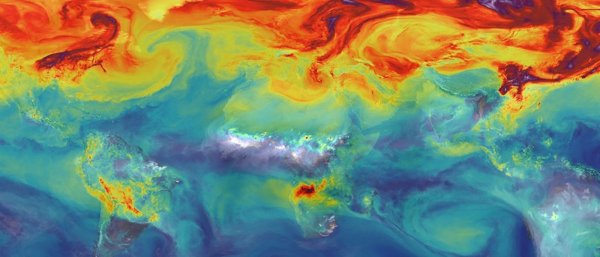
In a stark milestone for the planet's atmosphere, the World Meteorological Organization (WMO) has projected that 2016 will be the first complete calendar year with carbon dioxide concentrations remaining above 400 parts per million (ppm) globally. This follows a year when the benchmark was first recorded on a worldwide scale, although some regions had already crossed the line as early as 2012.
The 400 ppm figure is more than just a number; it represents a symbolic threshold that some researchers consider a point of no return. Ralph Keeling, who directs the carbon dioxide monitoring program at the Scripps Institution of Oceanography, noted that while brief dips below 400 ppm might still occur, it is already "safe to conclude" that monthly averages will not fall under that level again "for the indefinite future." His statement underscores the permanence of this shift in atmospheric composition.
Paris Agreement Gains Legal Force
Amid this sobering outlook, there is a parallel development: the Paris climate agreement has now met the dual conditions required for it to enter into legal force. Earlier this month, the treaty secured ratification from at least 55 nations that together account for a minimum of 55 percent of global greenhouse gas emissions. As a result, the agreement is set to take effect on November 4.
Later that same month, representatives from roughly 200 countries will convene in Morocco for COP22, the United Nations' annual climate conference, to discuss the next steps for implementing the Paris accord. The meeting comes at a critical juncture, as the world's attention turns from negotiation to action.
Implementation Challenges and the Road Ahead
The activation of the Paris agreement, combined with ongoing efforts from clean energy companies and environmentally conscious individuals, represents a potential pathway toward stabilizing the climate. However, the scale of action required is considerable. The number of initiatives and policies needed to fulfill the agreement's goals is daunting, as is the prospect of a future where emissions continue to rise unchecked.
Scientists and policymakers alike emphasize that the decisions made in the coming months will shape the planet's trajectory for decades. While the 400 ppm threshold may already be a permanent feature of our atmosphere, the rate at which CO2 levels climb—and the eventual peak—remains within human influence.
As the world prepares for COP22, the gap between scientific warnings and political action narrows, but the challenge of reversing or even slowing the increase in atmospheric CO2 persists. The coming years will test whether the global community can translate commitments into measurable change.
Comments 0