
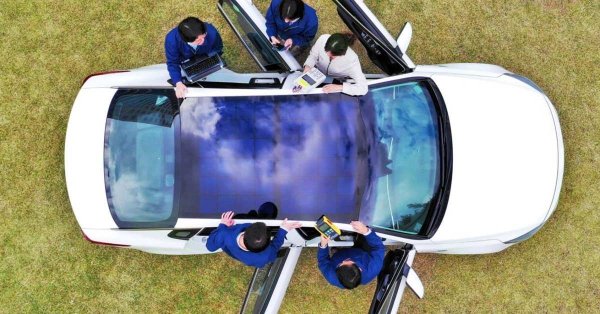
Starting in 2019, drivers may be able to pull into the sun and charge their car—at least partially. Hyundai Motor and Kia Motors jointly announced Wednesday that they will install solar panels on the roofs or hoods of select vehicles, a move that adds a renewable-energy component to their lineup without overhauling the existing powertrains.
The panels are designed to supplement, not replace, the conventional charging systems. For hybrid models, the first generation of the technology will help extend electric range; for gasoline-powered cars, it will support auxiliary functions; and for fully electric vehicles, it will provide an additional source of charge. The companies outlined a three-phase rollout, with each generation tailored to a different vehicle type.
According to the announcement, the first system is intended for hybrids, the second for internal-combustion models, and the third for battery-electric vehicles. This phased approach suggests the automakers are testing the technology across their portfolio before committing to a single platform.
Why Automakers Are Turning to Solar
The initiative reflects a broader industry push toward integrating energy-generating components into vehicles. Jeong-Gil Park, an executive at Hyundai Motor Group, said in the release that the solar roof is the first of several electricity-generating technologies expected to appear in future models. He described a shift from vehicles that passively consume energy to those that actively produce it.
While a fully solar-powered car remains out of reach, the move brings the concept closer to practical application. The panels will not eliminate the need for plugging in or fueling, but they could reduce reliance on external charging in certain conditions.
The announcement follows earlier reports that a fully solar-powered car might hit the road by 2019, though Hyundai and Kia's plans are more modest in scope.
For now, the solar roof is a supplementary feature, but it signals a growing interest in using vehicle surfaces as energy sources. As the technology matures, it may become a standard option across more models.
Comments 0