Croatian Savant Outsmarts Roulette Wheels Without Any Hidden Gadgets
A Croatian mathematics and physics expert, known by the pseudonym Niko Tosa, has reportedly developed a method to beat roulette by exploiting subtle wheel imperfections. His success has drawn attention from law enforcement and physicists alike, challenging the notion that the game is purely random.
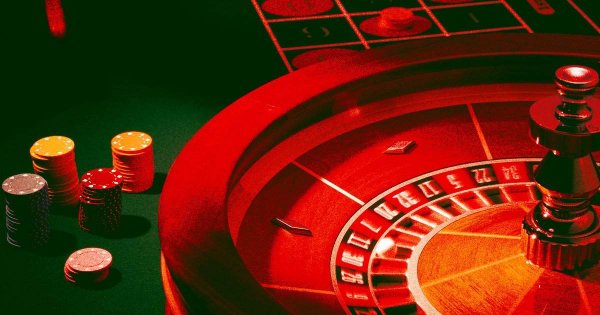
For decades, roulette has been considered the ultimate game of chance, a casino staple where the house always wins. But a Croatian mathematics and physics expert, operating under the pseudonym Niko Tosa, has reportedly found a way to tip the odds in his favor—without relying on hidden computers or electronic devices.
According to a Bloomberg profile, Tosa travels internationally, sometimes using fake documents and disguises, to locate roulette wheels that have developed subtle physical flaws. These imperfections, such as a slight tilt or wear from repeated use, can create predictable patterns in where the ball lands. Tosa's method, which he says requires only practice and a keen observational eye, has proven so effective that it caught the attention of London police in 2004.
That year, authorities launched an investigation into Tosa and two associates, suspecting they were using computerized devices to cheat. The inquiry ultimately cleared them of that charge, but it inadvertently confirmed that, under the right conditions, roulette can indeed be beaten. The key, as Bloomberg writer Kit Chellel explains, lies in the wheel itself. On a perfectly balanced wheel, the ball's trajectory would be entirely random. However, over time, wheels develop flaws that create what Chellel calls a 'drop zone'—a specific spot where the ball consistently falls due to the wheel's tilt or other irregularities.
'A drop zone is the Achilles’ heel of roulette,' Chellel said in the profile. 'That morsel of predictability is enough for software to overcome the random skidding and bouncing that happens after the drop.'
The notion that roulette can be beaten is not new, but it has long been dismissed by experts. Even the late physicist Stephen Hawking once wrote, 'It is practically impossible to predict the number that will come up. Otherwise physicists would make a fortune at casinos.' Tosa's reported success, however, suggests that Hawking's assessment may have overlooked the impact of physical imperfections on the game's randomness.
Tosa, who declined to reveal his real name, told Chellel that he does not use any computing device. When asked if he had ever employed such a machine, he replied, 'You can call me Nikola Tesla, if I have such a device!'
How Wheel Flaws Create Predictability
The phenomenon Tosa exploits is rooted in basic physics. A wheel that is even marginally tilted can cause the ball to decelerate and fall from the outer rim at the same spot on nearly every spin. Similar effects can occur on equipment worn from heavy use, or even when a croupier's hand lotion leaves a residue that alters the ball's path. These factors, while seemingly minor, can be enough to create a pattern that a trained observer or a simple algorithm can exploit.
The 2004 London police investigation, which was first reported by Bloomberg, did not result in charges against Tosa or his colleagues. Instead, it highlighted the potential vulnerabilities in casino equipment, prompting some establishments to take corrective measures, such as more frequent wheel maintenance and random rotation of wheels.
While Tosa's method remains largely anecdotal, his story has captured the imagination of gamblers and physicists alike. It serves as a reminder that even in games of pure chance, the physical world can introduce subtle biases that, when understood, can be leveraged.
For now, Tosa continues to travel, seeking out the perfect imperfect wheel. His exploits, detailed in the Bloomberg profile, offer a fascinating glimpse into the intersection of mathematics, physics, and gambling—a world where a sharp mind can sometimes outsmart the house.
Comments 0