
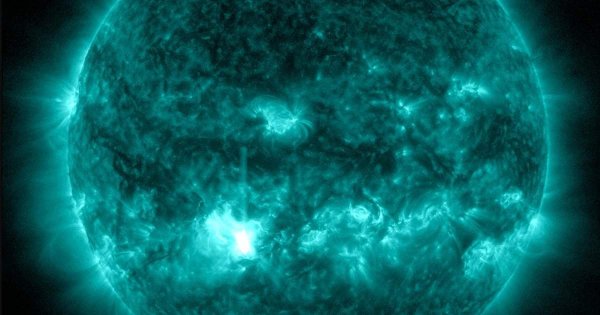
A powerful solar flare erupted from the Sun on October 2, causing brief radio blackouts over Hawaii and other parts of the Pacific, according to the National Oceanic and Atmospheric Administration (NOAA). The event, classified as an X7.1 flare, ranks as the second strongest of the current solar cycle, which began in 2019.
The flare originated from sunspot region 3842 and was accompanied by a coronal mass ejection (CME) — a massive burst of solar plasma. NOAA's Space Weather Prediction Center confirmed that the CME is now traveling toward Earth and is expected to reach our atmosphere by October 5. As a result, a geomagnetic storm warning has been issued, with conditions ranging from minor to strong.
Potential Impacts and Auroras
While the idea of solar plasma hurtling toward Earth may sound alarming, NOAA says the expected effects are limited. Some technological infrastructure, such as satellites and power grids, could experience minor disruptions, but these are described as "mainly mitigable." For most people, the more visible impact will be the possibility of auroras, or northern lights, which could be seen across many northern states and parts of the lower Midwest and Oregon.
This event echoes a similar X-class flare in May, which produced spectacular auroras visible as far south as Florida. That earlier display was the strongest of the current solar cycle, with an X8.7 flare recorded on May 14. The upcoming CME could offer another chance for skywatchers to witness the phenomenon, though NOAA advises checking their updates for the latest forecasts.
The solar flare and CME serve as a reminder of the Sun's influence on our planet, from disrupting communications to creating natural light shows. As solar activity continues to rise, scientists are monitoring these events closely to better predict their effects on Earth's technology and atmosphere.
Comments 0