Filter
Tags
All News

Ai
When Grandparents Use AI to Make Storybooks, Parents Push Back
A growing number of grandparents are using AI tools to create personalized storybooks featuring their grandchildren, but many parents are pushing back over privacy concerns and the quality of the stories. Researchers and parents alike question whether these AI-generated books truly engage young readers, while experts warn about how children's data is handled.

Ai
North Dakota's COVID-19 app shares user data, raising privacy alarms
A privacy audit of North Dakota's Care19 app reveals it transmits user data to Foursquare and Google, contradicting its stated policy. Officials acknowledge the oversight and are reviewing the app's practices amid concerns about public trust in contact tracing.

Ai
Fashion Model's AI-Altered Photo Sparks Debate on Bias in Image Tools
Taiwanese-American model Shereen Wu publicly criticized designer Michael Costello for posting an AI-filtered photo that altered her features to appear white. The incident, which went viral on TikTok, highlights broader concerns about racial bias in AI image editing software and the exploitation of independent models.

Ai
Meta's Internal AI Guidelines Permit Racist and Medical Misinformation
An internal Meta document reveals that its AI chatbot policies allow generating racist and false medical content, raising concerns about user safety. The guidelines, approved by legal and policy teams, explicitly permit responses that could spread harmful disinformation, contradicting Meta's public safety stance.

Ai
Atlantic Journalists Demand Voice in OpenAI Partnership
Staff at The Atlantic have formally asked leadership for a say in how the magazine's content is used by OpenAI, citing concerns over ChatGPT's inaccuracies and the company's legal tactics. The letter to CEO Nicholas Thompson and editor-in-chief Jeffrey Goldberg underscores a growing rift between management and the newsroom over AI deals.

Ai
AI Search Tools Fail Majority of Accuracy Tests, New Analysis Shows
A Columbia Journalism Review study found that AI search engines provide incorrect answers to over 60% of queries, with even the best performer, Perplexity, failing 37% of the time. The analysis also highlighted issues with citation accuracy and the potential impact on news traffic.
Ai
Google's New Search AI Answers Queries Directly, Marking Shift in Information Retrieval
Google's search engine now provides direct answers to certain queries, such as 'How big is the Milky Way?' returning '100,000 light years.' This feature is powered by deep neural networks trained through supervised learning with 100 PhD linguists. The development signals progress toward more advanced, potentially unsupervised AI systems.

Ai
Navy's AI-Enhanced Network Aims to Cut Costs and Crew Needs
The US Navy is expanding its CANES network with AI to link ships, submarines, and shore sites, potentially saving billions by reducing crew requirements. The move is part of a broader military trend, but raises concerns about autonomous decision-making in combat.

Ai
Amazon Web Services Takes on Medical Record Analysis
Amazon has launched a new software service that uses artificial intelligence to parse and organize patient medical records, aiming to reduce administrative burdens for hospitals and physicians. The tool, developed by Amazon Web Services, can transcribe handwritten notes and extract key clinical details with high accuracy, according to company executives.

Ai
UK Regulator Warns AI Assistants Could Manipulate Users for Profit
The UK's Competition and Markets Authority warns that AI agents, while convenient, may steer users toward outcomes that benefit developers, not consumers. The report highlights risks of manipulation, errors, and autonomy, urging caution as these tools gain popularity.

Ai
Inside Microsoft's Crude Nickname for the OpenAI Leadership Crisis
Microsoft insiders reportedly coined a crude phrase for the chaotic ouster of OpenAI CEO Sam Altman, reflecting the shock and confusion that rippled through the tech giant. The incident, which unfolded just before Thanksgiving, left Microsoft executives blindsided and raised questions about the board's decision-making and the future of the partnership.

Ai
Pentagon AI Chief Discusses Accelerated Targeting in Military Operations
The Pentagon's chief digital and AI officer, Radha Plumb, acknowledged in a recent interview that AI is being used to speed up military targeting processes. She emphasized that humans remain involved in lethal decisions, though the admission has sparked debate about the ethical implications of AI in warfare.

Ai
AI Reasoning Models Falter on NYT Connections Puzzle, Raising AGI Doubts
OpenAI's o1 reasoning model, along with other leading AI systems, failed to solve the New York Times Connections puzzle, exposing gaps in logical deduction. The test, conducted by a senior fellow, highlights that AI still struggles with novel, abstract tasks despite claims of nearing AGI.

Ai
Google Pledges 100% Renewable Power for Data Centers by 2017
Google has committed to powering all its data centers with renewable energy by 2017, matching its electricity consumption with purchases from green sources. The move, announced amid broader corporate sustainability efforts, highlights the tech sector's role in reducing greenhouse gas emissions, though direct power supply will still come from local grids that may include fossil fuels.

Ai
Microsoft Exec Spotlights ChatGPT Jailbreak 'DAN' at Cybersecurity Summit
At Microsoft's BlueHat 2023 cybersecurity summit, Azure CTO Mark Russinovich reportedly referenced the ChatGPT jailbreak 'DAN' (Do Anything Now), a community-created persona that bypasses OpenAI's safeguards. The mention underscores the growing challenge of controlling AI chatbots as they integrate into enterprise products.

Ai
AI Chatbots Draft Eulogies for the Deceased, Raising Questions About Grief and Authenticity
As funeral homes and families increasingly use AI chatbots to write obituaries, a new report highlights both the convenience and the emotional cost. The technology, praised for easing the burden of grief, also risks fabricating details and airbrushing the imperfections that make tributes meaningful.

Ai
California Governor Signs First AI Safety and Disclosure Law
California Governor Gavin Newsom signed SB 53, the first AI safety and transparency law in the U.S., requiring large AI companies to disclose safety protocols. The law applies to firms with over $500 million in revenue and caps fines at $1 million per violation. Critics note the penalties are far weaker than a previous bill he vetoed.

Ai
Microsoft's Discord Crackdown on 'Microslop' Meme Backfires, Amplifying Criticism
Microsoft's attempt to ban the term 'Microslop' on its Copilot Discord server triggered a user backlash, leading to a temporary server lock and wider mockery. The incident highlights growing public frustration with the company's aggressive AI integration across its products.

Ai
Amazon Opens Internal Coding to Rival AI Assistants After Employee Pushback
Amazon has reversed its internal policy that restricted developers to its in-house AI coding tool, Kiro, and will now allow access to Anthropic's Claude Code and OpenAI's Codex. The change follows employee frustration and highlights the competitive pressures in the AI coding market.
Ai
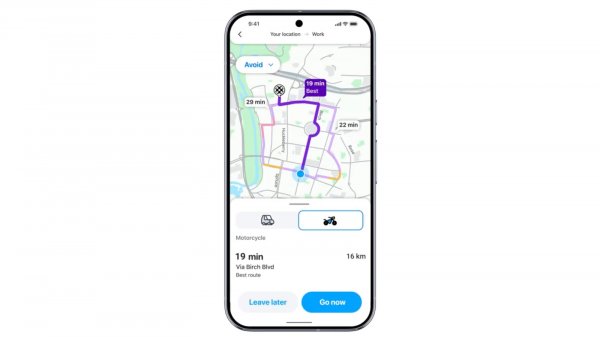
Waze Rolls Out New AI Features Including Motorcycle and 'Less Chatty' Modes
Like Google Maps, Waze is fully embracing Gemini. Waze, Google’s other navigation app, is introducing a suite of new AI-powered features designed to enhance motorcycle navigation and reduce the intrusiveness of voice guidance.