
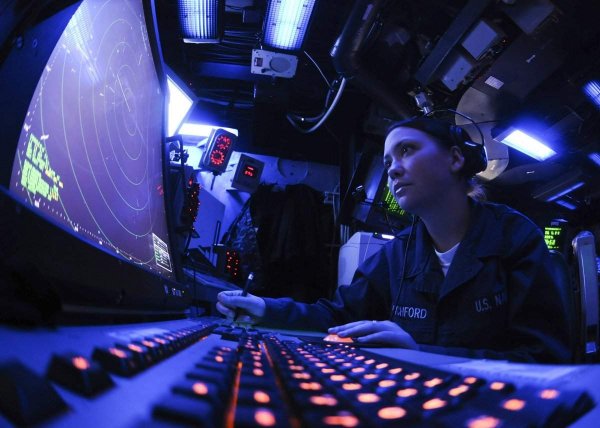
The U.S. Navy is moving to expand its Consolidated Afloat Networks and Enterprise Services (CANES) into an AI-driven network that links ships, submarines, and shore installations, a step that could trim manpower costs by billions of dollars over the system's lifetime. The initiative, reported by Warrior, is part of a broader push to automate tactical data processing, including threat and target information, to make fleets safer and more effective.
By 2020, the service aims to deploy CANES across 190 vessels and Maritime Operations Centers. Rear Adm. Danelle Barrett, director of the Navy's Cyber Security Division, told Warrior that the service is keen on leveraging AI to improve current capabilities. “We are very interested in artificial intelligence being able to help us better than it is today,” she said, adding that the Navy wants to trust machines and explore AI's use against adversaries.
The Navy's move is not isolated. The U.S. Air Force is integrating machine learning into its intelligence operations through Project Maven, which uses algorithms to analyze drone footage. Meanwhile, China and Russia are also investing in AI for military upgrades, signaling a global race to harness the technology.
Balancing Efficiency and Control
AI and automation promise to reduce the number of sailors needed to run operations, but the prospect of machines making life-and-death decisions has drawn warnings from prominent figures. Elon Musk and other AI experts have urged world leaders to consider the implications of autonomous systems that could cause casualties. The United Nations is currently deliberating on how to regulate autonomous weapons, though CANES itself is not designed as a weapon.
The expansion of CANES reflects a broader trend in military modernization, where AI is seen as a key to maintaining strategic advantage. However, experts caution that the technology must be developed with safeguards to ensure human oversight. As the Navy integrates AI into its networks, it will need to balance efficiency gains with ethical and operational risks.
The outcome of the UN's discussions and the Navy's own policies will shape how AI is used in future conflicts. While the idea of fully autonomous killer robots remains science fiction, the decisions made now will determine whether that stays true.
Comments 0