
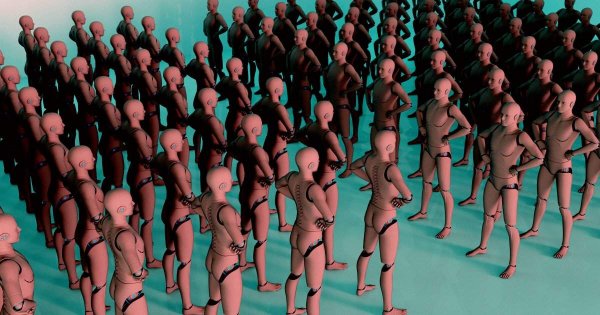
A study published in the journal Science warns that artificial intelligence, particularly large language models and autonomous agents, can be weaponized to manipulate public opinion on a population-wide scale. The research highlights a new threat: AI swarms—massive networks of autonomous AI tools that can impersonate humans across the internet and social media, potentially undermining democratic processes.
The study's authors note that organized social media manipulation has expanded from 28 countries in 2017 to 70 countries today, affecting nations from the Philippines to the United States. They point to recent incidents in Brazilian and Irish elections as evidence that democratic institutions are already under attack from these increasingly sophisticated threats.
How AI Swarms Operate
According to the paper's abstract, these systems combine LLM reasoning with multiagent architectures, enabling them to coordinate autonomously, infiltrate online communities, and fabricate consensus efficiently. This capability marks a significant escalation from earlier forms of social media manipulation, which relied on human-operated fake accounts.
The researchers emphasize that the threat is not hypothetical. AI-driven misinformation campaigns have already been observed, often targeting welfare recipients and immigrants, frequently stirred by right-wing actors. These campaigns exploit the same vulnerabilities that allowed pre-AI misinformation to flourish on unaccountable social media platforms.
Legislative and Ethical Challenges
Regulating such interference raises complex questions, including whether propaganda botnets should be protected as free speech. Some AI bot networks operate openly as for-profit startups, attracting millions in venture capital, complicating efforts to curb their use.
The study also draws a direct line to real-world consequences of past misinformation campaigns, such as the Facebook-enabled Rohingya genocide in Myanmar, underscoring the potential severity of AI-enabled manipulation.
Despite the growing threat, the researchers note that there is alarmingly little political will to address the issue. The path for AI misinformation was laid years ago, and without decisive action, democratic processes worldwide remain vulnerable.
The findings serve as a stark reminder that AI's impact extends far beyond chatbots and meme generators, posing a serious challenge to the integrity of public discourse and elections.
Comments 0